 TenorOps
Compliance
OSHA Restaurant Safety Checklist: US Compliance Guide
A comprehensive compliance guide and checklist for US restaurant operators to meet federal OSHA and state workplace safety standards and pass audits.
Immediate steps for restaurant workplace safety
Under the Occupational Safety and Health Act of 1970, commercial restaurant operators in the United States must provide a workplace free from recognized hazards. An OSHA restaurant workplace safety checklist is a structured operational tool used by restaurant owners and general managers to identify, evaluate, and mitigate physical and chemical hazards in the kitchen and dining areas.
While OSHA regulations are often associated with heavy industry, they apply in full force to food service. Restaurant operations combine slippery floors, open flames, hot oil, razor-sharp blades, and hazardous cleaning chemicals. This high-risk environment, combined with high staff turnover, makes systematic safety checks essential.
Failing to implement a safety checklist can result in severe worker injuries, costly workers' compensation claims, and civil penalties of up to $16,550 per serious violation, with willful or repeat violations reaching $165,514 (OSHA's 2025 amounts, kept for 2026). This guide outlines the safety standards for US restaurants, breaks down the most common citations, and provides an actionable compliance checklist.
This guide is for educational purposes only and does not constitute formal legal advice. Restaurant operators should consult with legal counsel or safety professionals to address specific state and local compliance requirements.
The regulatory framework: Federal OSHA vs. State Plans
To successfully manage compliance, restaurant operators must understand the relationship between federal regulations, state-level enforcement, and general safety duties:
- Federal OSHA: The Occupational Safety and Health Administration (OSHA), under the US Department of Labor, establishes and enforces national workplace safety standards under Title 29 of the Code of Federal Regulations (29 CFR). Federal OSHA maintains direct jurisdiction over private-sector employees in approximately half of the US states.
- State Plans: Under Section 18 of the OSH Act, states can operate their own safety programs (State Plans) if they are "at least as effective" as federal standards. Currently, 22 states operate comprehensive State Plans. Examples include California (Cal/OSHA), Oregon (Oregon OSHA), Washington (L&I), and Michigan (MIOSHA). State programs frequently enact standards that are more stringent than federal rules, such as California's mandatory Injury and Illness Prevention Program (IIPP) and specific indoor heat illness prevention rules.
- The General Duty Clause: Under Section 5(a)(1) of the OSH Act, every employer must keep their workplace free of recognized hazards that are causing or are likely to cause death or serious physical harm. OSHA uses this clause to cite employers for clear hazards even when no specific, written federal standard covers the precise situation (such as workplace violence risks or extreme indoor kitchen heat).
The "Big Five" restaurant OSHA violations
OSHA inspection data reveals that food service citations are heavily concentrated in five core operational areas. Managers must understand and address these frequent failure points:
1. Hazard Communication (HazCom - 29 CFR 1910.1200)
The Hazard Communication Standard is consistently the most frequently cited OSHA violation in retail food service. Kitchens rely on hazardous chemicals, including high-strength degreasers, sanitizers, chlorine bleach, oven cleaners, and commercial dishwashing detergents.
Under 29 CFR 1910.1200, restaurants using commercial cleaning chemicals must maintain a written Hazard Communication program. This program must include a complete inventory of all chemicals on-site, a central binder or digital hub containing up-to-date Safety Data Sheets (SDS) provided by chemical manufacturers, and documented training records proving that employees understand the health risks, necessary personal protective equipment (PPE), and spill response protocols.
Furthermore, if a concentrated chemical is transferred into a secondary container (such as a spray bottle of diluted sanitizer), the secondary container must be clearly labeled with the product name and primary hazard warnings.
2. Walking-Working Surfaces (29 CFR 1910.22)
Slips, trips, and falls represent the leading cause of non-fatal injuries in the restaurant industry, resulting in extensive lost-workday claims. Water from dishwashing areas, grease splashes near fryers, ice spillages around drink stations, and uncoiled equipment cords across pathways create constant hazards.
Under 29 CFR 1910.22, restaurant operators are required to keep all walking and working surfaces clean, dry, orderly, and in good repair. When wet processes are used, it requires drainage and, to the extent feasible, dry standing places such as mats or platforms (29 CFR 1910.22(a)(2)); high-friction, slip-resistant floor mats in high-risk wet zones (such as the dish pit, behind bars, and adjacent to ice machines) are the usual way restaurants meet this.
It also requires the immediate cleanup of all spills, the visible placement of yellow "Wet Floor" warning signs (best practice; 29 CFR 1910.145 governs how caution signs are designed and used), and the enforcement of a strict company policy requiring employees to wear slip-resistant, closed-toe footwear.
3. Exit Routes and Emergency Planning (29 CFR 1910.37 & 1910.38)
In a fast-paced commercial kitchen, inventory deliveries can easily lead to boxes and bulk ingredient sacks being stacked in rear hallways. However, blocking an emergency exit path—even temporarily during a busy dinner shift—is a critical safety violation that carries immediate penalties.
Under 29 CFR 1910.37, every exit route in a restaurant must remain completely unobstructed and free of storage at all times. Under 29 CFR 1910.36(d), exit doors must open from the inside without a key or tool whenever the building is occupied, so they must never be chained or locked against exit. Exit doors must swing outward in the direction of travel when the room is designed for more than 50 people or holds high-hazard contents (29 CFR 1910.36(e)(2)).
Additionally, exit routes must be clearly marked with illuminated, visible "EXIT" signs, and the facility must maintain functional emergency backup lighting. Under 29 CFR 1910.38, establishments with more than 10 employees must maintain a written Emergency Action Plan (EAP) outlining evacuation routes, employee roles during a crisis, and fire reporting procedures.
4. Fire Protection and Extinguishers (29 CFR 1910.157 & 1910.160)
Commercial kitchens contain all three components of the fire triangle: fuel (grease, cooking oils, gas), heat (burners, ovens, fryers), and oxygen. Standard water or dry chemical extinguishers are highly dangerous when applied to hot grease, as they can cause explosive flare-ups.
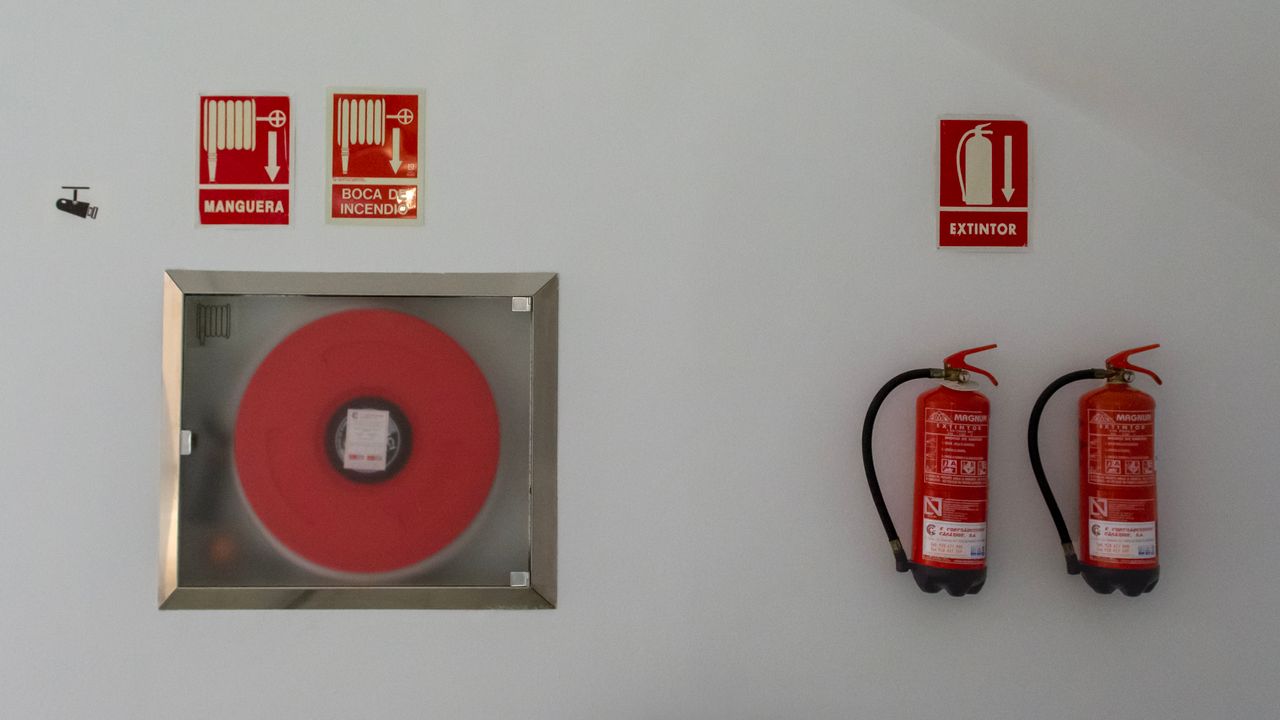
NFPA 10, the extinguisher standard that fire codes adopt, requires specialized Class K wet chemical fire extinguishers within 30 feet of any cooking appliance utilizing vegetable or animal oils, and OSHA's 29 CFR 1910.157 governs how they are mounted, inspected, and maintained. These Class K extinguishers must be mounted in highly visible, unobstructed locations, inspected visually by management every 30 days, and professionally serviced and tagged annually.
Additionally, the restaurant's automatic hood suppression system (complying with UL 300 standards) must be inspected and serviced by a qualified technician every six months under NFPA 96 (OSHA's 29 CFR 1910.160 sets an annual minimum), with documented inspection tags kept on file.
5. Personal Protective Equipment (29 CFR 1910.132 & 1910.138)
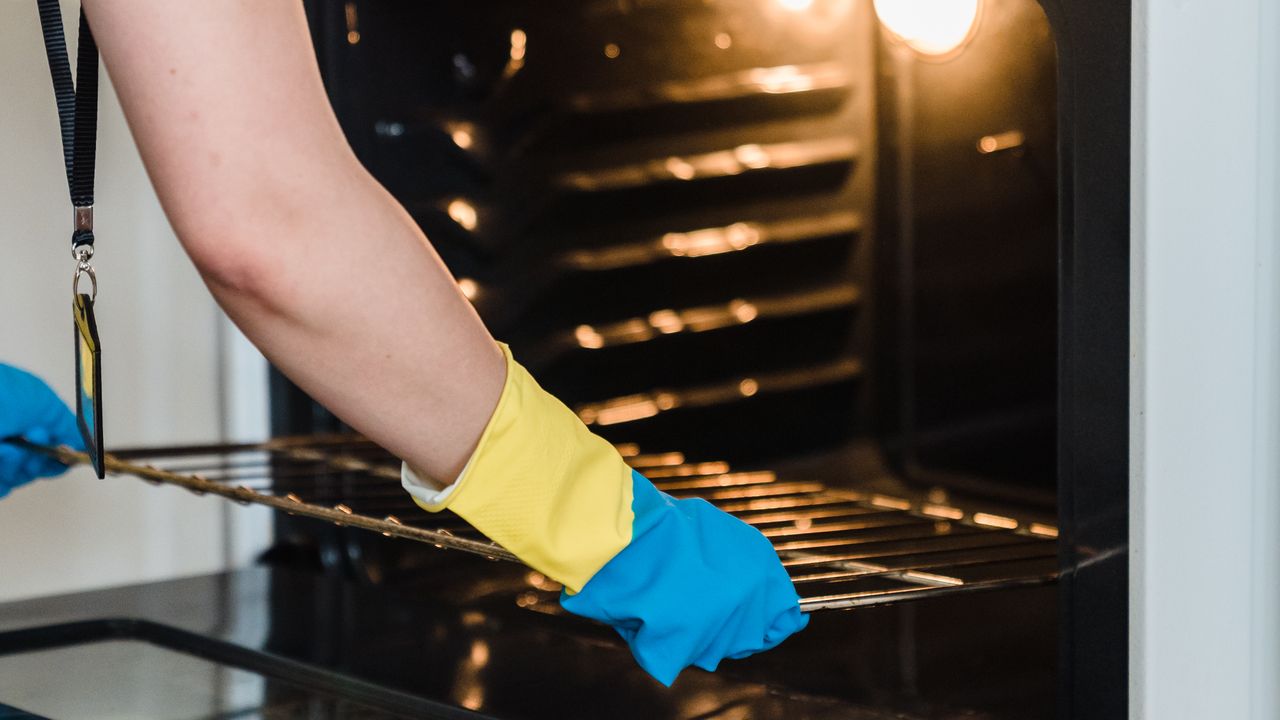
OSHA requires employers to conduct a formal hazard assessment of their workplace to determine what personal protective equipment (PPE) is necessary, and to provide that PPE to employees at no cost. In a restaurant, common required PPE includes cut-resistant metal mesh or Kevlar gloves for kitchen staff using knives or cleaning slicer blades, heavy-duty insulated gloves for handling hot fryer baskets or cleaning grills, and chemical-resistant rubber gloves and splash-resistant safety goggles for staff handling concentrated dishwashing chemicals or corrosive oven cleaners. Insulated gloves are only one part of burn and scald prevention around fryers, grills and steam equipment.
Under 29 CFR 1910.138, employers must ensure that employees actually wear the required hand protection when exposed to hazards such as severe cuts, abrasions, chemical burns, or extreme thermal temperatures.
Additional vital restaurant compliance standards
Beyond the major citation categories, several highly specific workplace standards govern commercial kitchen operations:
- Kitchen Machinery and Machine Guarding (29 CFR 1910.212): Power-driven kitchen equipment like meat slicers, dough mixers, food processors, and grinders can cause severe cuts or amputations if safety guards are bypassed. Slicers must feature functional blade guards that cover the cutting edge, and commercial dough mixers must be equipped with interlocking cage guards that automatically cut power to the motor when the cage is lifted. Slicers and mixers must also be anchored to prevent shifting or walking during operation.
- Child Labor Restrictions and Machine Safety: Under the Fair Labor Standards Act (FLSA), workers under the age of 18 are strictly prohibited from operating, adjusting, setting up, cleaning, oiling, or repairing power-driven bakery machines (including commercial dough mixers), meat slicers, grinders, or choppers. Restaurant operators should place highly visible warning decals on this machinery stating that no employees under 18 may operate or clean the equipment.
- Electrical Safety (29 CFR 1910.303, 1910.304 & 1910.334): Water and electricity are a deadly combination in commercial kitchens. To prevent severe shocks and electrocution, the National Electrical Code (NEC 210.8(B)), which local building codes adopt, requires ground fault circuit interrupters (GFCIs) on 120-volt, single-phase, 15- and 20-ampere receptacles in commercial kitchens and within 6 feet of sinks; OSHA's 29 CFR 1910.304(b)(3) separately requires GFCI protection in bathrooms, on rooftops, and for temporary wiring. Staff must be trained never to plug or unplug electrical equipment with wet hands, and any cords showing frays, exposed wires, or missing grounding prongs must be tagged out of service immediately.
- Heat Illness Prevention: While federal OSHA regulates extreme heat exposure under the General Duty Clause, several states enforce strict, specific heat standards. For example, California’s heat regulations require restaurants to provide access to cool drinking water, designated shaded or cool rest areas, and mandatory rest breaks when indoor kitchen temperatures exceed critical thresholds, such as during intense cooking shifts or HVAC failures.
OSHA recordkeeping and reporting obligations
Under 29 CFR Part 1904, most restaurants are partially exempt from routine injury recordkeeping, but every restaurant must report severe injuries:
- The Partial Exemption: Full-service restaurants, limited-service eating places, and bars (NAICS 7221, 7222, and 7224) are listed in Appendix A to Subpart B of Part 1904, so they are partially exempt from keeping OSHA injury and illness records at any size (§ 1904.2). Any business with 10 or fewer employees at all times during the last calendar year is also partially exempt (§ 1904.1). Caterers and food service contractors (NAICS 7223) are not on the list. The exemption ends if OSHA or the Bureau of Labor Statistics asks you in writing to keep records, and it never covers severe injury reporting under § 1904.39, which applies to every employer regardless of size or industry.
- The OSHA 300 Log, 300A, and 301 Forms: Establishments that are not exempt, or that OSHA or BLS has asked in writing to keep records, must record every work-related injury or illness that results in death, loss of consciousness, days away from work, restricted work or job transfer, or medical treatment beyond basic first aid. These incidents must be recorded within seven calendar days using OSHA Form 300 (Log of Work-Related Injuries and Illnesses) and Form 301 (Injury and Illness Incident Report).
- The Annual Summary Posting (OSHA Form 300A): At the end of each calendar year, covered employers must compile their injury data onto the OSHA Form 300A Summary. This summary must be certified by a company executive and physically posted in a prominent, highly visible employee area from February 1 through April 30 of the following year, even if zero recordable injuries occurred.
- Severe Incident Reporting: Every restaurant operator must report work-related fatalities to OSHA within 8 hours. Any work-related in-patient hospitalization, amputation, or loss of an eye must be reported to OSHA within 24 hours of the occurrence. These reports must be made via phone to the nearest OSHA area office or electronically on the official OSHA portal.
The OSHA restaurant workplace safety checklist
This table acts as a structured compliance checklist that managers can incorporate into their weekly and monthly inspection routines to maintain federal and state safety compliance:
| Checkpoint Category | OSHA CFR Reference | Standard Compliance Requirement | Verification and Monitoring Method |
|---|---|---|---|
| Hazard Communication | 29 CFR 1910.1200 | A written HazCom program is on-site with a current Safety Data Sheet (SDS) for every chemical. | Verify the chemical binder is complete; check that all secondary spray bottles have hazard labels. |
| Walking-Working Surfaces | 29 CFR 1910.22 | Floors are clean, dry, and free of grease or debris. High-friction mats are in place. | Inspect the dish pit and cook line; confirm mats are clean, flat, and free of curling edges. |
| Emergency Exit Paths | 29 CFR 1910.37 | Exit paths, hallways, and backdoors are completely unobstructed and unlocked during service. | Do a walk-through of rear corridors; verify emergency panic hardware functions smoothly. |
| Emergency Lighting | 29 CFR 1910.37 | Illuminated EXIT signs are functional, and emergency battery-backup lighting works. | Press the test button on exit signs and emergency lights monthly to verify battery power. |
| Class K Extinguishers | NFPA 10 / 29 CFR 1910.157 | Class K wet chemical extinguisher is mounted within 30 feet of cooking lines and is unobstructed. | Check the pressure gauge is in the green zone monthly; confirm the annual service tag is current. |
| Hood Suppression System | NFPA 96 / 29 CFR 1910.160 | The commercial hood chemical suppression system has been professionally inspected. | Verify the semi-annual inspection tag attached to the hood system is signed and up to date. |
| Machine Guarding | 29 CFR 1910.212 | Power slicers and mixers have intact safety guards and automatic power-cutoff interlocks. | Check that meat slicer knife guards are locked; confirm mixer cage interlocks function properly. |
| Minor Worker Safety | 29 CFR 570.61 & 570.62 | Minor workers (under 18) do not operate, clean, or adjust power mixers, slicers, or grinders. | Verify that YouthRules warning decals are physically affixed to all hazardous equipment. |
| Electrical Grounding | NEC 210.8(B) / 29 CFR 1910.304 | GFCIs are installed on all electrical outlets located within 6 feet of sinks or water lines. | Use a GFCI outlet tester monthly to verify that the circuit trip function works correctly. |
| First Aid & Eyewash | 29 CFR 1910.151 | Fully stocked first aid kits are accessible; an eyewash station is functional near chemicals. | Inspect first aid kits weekly; verify that eyewash stations are clean, pressurized, and flushing. |
| OSHA 300A Summary | 29 CFR 1904.32 | If the restaurant is not partially exempt (or OSHA/BLS has asked in writing), Form 300A is certified and posted in the employee breakroom or locker area annually. | Confirm the certified summary is posted visibly from February 1 through April 30. |
Active managerial control and corrective actions
Establishing Active Managerial Control means that restaurant management does not simply wait for an OSHA inspection or an employee injury before addressing hazards. Proactive managers build safety checks directly into the daily operational rhythm of the restaurant.
A highly effective way to implement this is to integrate critical safety checks into the daily restaurant line check template before lunch and dinner services begin. Ensuring that walking paths are dry, emergency exits are clear, and hand sinks are unobstructed are just as important as monitoring food temperatures. Additionally, incorporating heavy kitchen cleaning tasks—such as scrubbing grease from exhaust filters and wiping down chemical storage shelves—into the weekly kitchen cleaning schedule prevents the buildup of flammable residues and chemical cross-contact hazards.
A robust workplace safety program also coordinates with the restaurant's employee illness policy to prevent cross-contamination and protect worker health. If a safety hazard or physical failure is identified during a daily walkthrough, management must execute an immediate corrective action loop:
- Isolate and Alert: Immediately isolate the hazardous area or machine. For example, if a meat slicer guard is damaged, disconnect the power source, apply a lock or tag to prevent use, and alert all staff.
- Correct the Hazard: Execute immediate physical corrections. Mop up water spills, clear boxes away from fire exits, and repack first aid kits.
- Document and Report: Record the identified hazard, the immediate corrective action taken, and the date of resolution in the company's safety logbook.
- Professional Resolution: If the issue requires specialized repairs (such as a faulty hood suppression system or an ungrounded electrical outlet), contact a certified technician immediately and retain the service receipts.
- Staff Retraining: If the hazard resulted from improper employee behavior (such as blocking exits or failing to wear cut-resistant gloves), conduct immediate corrective training and document the training with signed participant sheets.
To prevent team members from simply checking off safety lists without performing real physical verifications, managers must actively audit and monitor compliance. Operators can review our guide on how to stop pencil-whipping checklists to establish real operational accountability and protect their workforce.
Conclusion
Creating a safe workplace is a continuous commitment that requires clear processes, regular training, and reliable recordkeeping. By standardizing safety checks, restaurant owners can protect their staff, avoid expensive regulatory citations, and ensure a smooth, compliant operation.
With TenorOps, you can transition your paper checklists into modern, photo-verified digital workflows. Track chemical logs, manage daily kitchen line checks, and hold your teams accountable in real time. To discover how easy it is to eliminate paper clutter and drive operational excellence across all your locations, request a TenorOps demo today.
Official sources
- OSHA Young Worker Safety in Restaurants eTool
- OSHA Small Business Safety and Health Handbook
- OSHA Injury and Illness Recordkeeping and Reporting Standards (29 CFR 1904)
- California DIR Labor Enforcement Task Force - Restaurant Employer Compliance Guide
- California DIR Division of Occupational Safety and Health (Cal/OSHA) Publications