 TenorOps
Food Safety
Quebec Restaurant Food Safety & MAPAQ Inspection Checklist
A practical MAPAQ food safety and hygiene checklist for Quebec restaurants to comply with the Food Products Act and pass health inspections.
Introduction and Scope of Quebec Food Safety Regulation
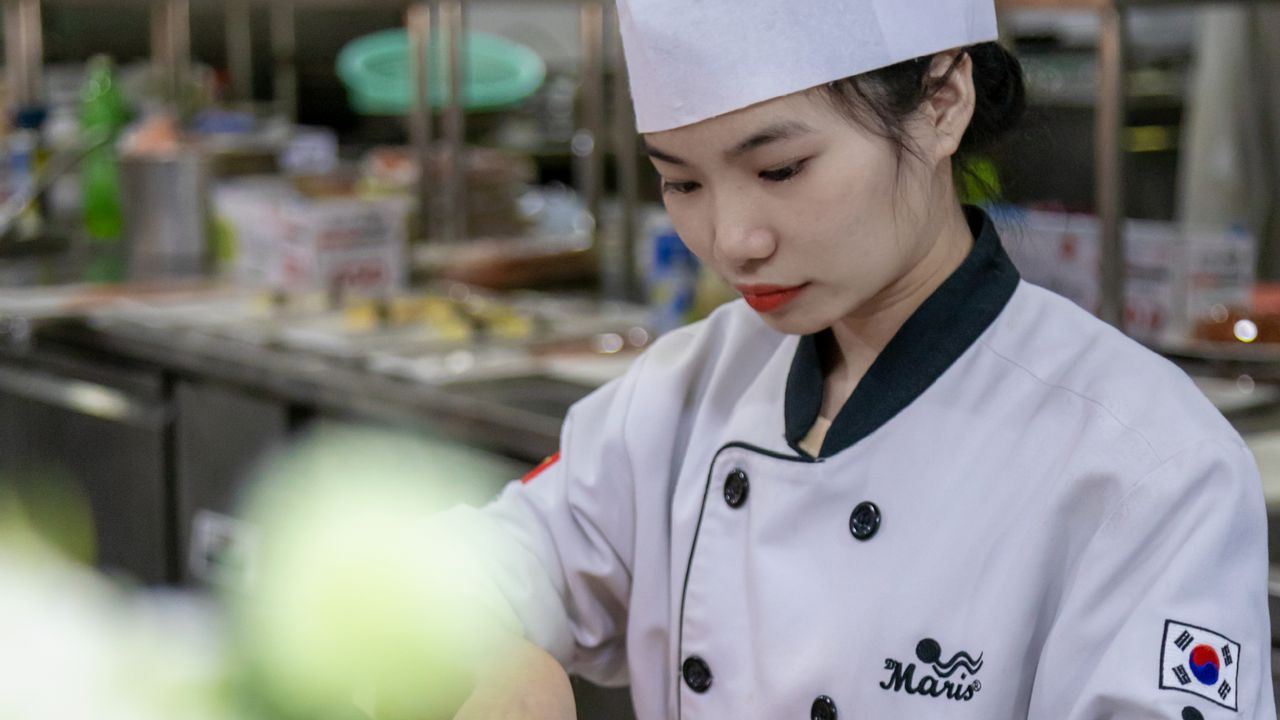
In Quebec, Canada, food service operations are subject to strict regulatory supervision designed to ensure high standards of hygiene and protect consumers from foodborne illnesses. The primary provincial authority governing retail food safety is the Ministère de l'Agriculture, des Pêcheries et de l'Alimentation du Québec (MAPAQ). MAPAQ administers and enforces the provincial Food Products Act (Loi sur les produits alimentaires, RLRQ, c. P-29) and the secondary Regulation respecting food (Règlement sur les aliments, RLRQ, c. P-29, r. 1).
For restaurant owners, chefs, and food safety managers, understanding the regulatory boundaries is critical to maintaining a compliant kitchen. While MAPAQ is the ultimate authority across the province, there is a key geographical delegation of powers to note:
- The Island of Montreal: Under a formal delegation agreement, the City of Montreal's Food Inspection Division (Module de l'inspection des aliments de la Ville de Montréal) conducts all food safety inspections on Montreal territory. The Montreal food inspection guide covers the city's process and the court fines that can follow.
- The Rest of Quebec: In Quebec City, Laval, Sherbrooke, and all other regional municipalities, inspections are conducted directly by MAPAQ provincial inspectors.
Regardless of whether your inspector is from the province or the City of Montreal, they enforce the exact same provincial standards under the Règlement sur les aliments. This guide explains the key operational requirements, detailing what inspectors search for and providing a daily checklist to keep your kitchen compliant and audit-ready.
Disclaimer: This resource is provided for informational and educational purposes only and does not constitute formal legal advice or professional regulatory counsel. Operators must consult MAPAQ or the City of Montreal Food Inspection Division and the official text of the Règlement sur les aliments for precise compliance requirements.
The Risk-Based Inspection Framework: The "5M Method"
To standardise food safety audits, MAPAQ and municipal inspectors employ a risk-based approach known as The 5M Method (La méthode d'inspection des 5 M). This framework evaluates five critical operational dimensions to determine the sanitary condition of an establishment:
- Matière (Material / Raw Materials): This category focuses on the origin, safety, freshness, and traceability of ingredients. Inspectors verify that all food comes from approved sources, is free of contamination, is stored at compliant temperatures, and is clearly labelled (including expiration dates, storage instructions, and allergen declarations).
- Méthode (Method): This evaluates culinary procedures. Inspectors examine temperature control logs, cooking procedures, cross-contamination prevention (contamination croisée), cooling (refroidissement), defrosting/thawing (décongélation), reheating (réchauffage), and the systematic keeping of mandatory registers.
- Main-d'œuvre (Manpower / Staff): This covers employee hygiene, handwashing routines, clothing standards, hair restraints, and the physical health status of handlers. It also governs compliance with mandatory food safety training and the physical presence of certified personnel.
- Matériel (Equipment): Inspectors check the cleanliness, maintenance, and design of all equipment, cookware, and utensils coming into contact with food. This includes verifying the operational condition of dishwashers, walk-in coolers, and temperature probes.
- Milieu (Environment / Premises): This category evaluates the physical environment, including the cleanliness of the kitchen, dining rooms, and dry storage. It also covers waste disposal, pest control, and the potability of the water supply (specifically requiring semi-annual testing for well-water systems).
Core Temperature Control Mandates (Section 1.4.1)
Under Section 1.4.1 of the Règlement sur les aliments, temperature control is an absolute legal mandate. Failing to keep potentially hazardous foods (referred to in official French guidelines as aliments potentiellement dangereux or APDs) out of the Temperature Danger Zone is classified as a critical violation.
The Temperature Danger Zone
The Temperature Danger Zone (la zone de danger) spans from 4°C to 60°C (39.2°F to 140°F). Within this range, pathogenic bacteria multiply rapidly.
- Refrigeration & Cold Storage: Potentially hazardous foods must be cooled immediately and maintained constantly at an internal and ambient temperature of 4°C (39.2°F/40°F) or lower (Section 1.4.1).
- Frozen Storage: Frozen products must be stored constantly at an internal and ambient temperature of -18°C (0°F) or lower (Section 1.4.1).
- Hot Holding: Any hot food intended for immediate hot-holding or service must be kept at a constant internal temperature of 60°C (140°F) or higher (Section 1.4.1).
- Active Prep Exception: APDs may go above 4°C only for the time a recognised preparation step actually needs (Section 1.4.1). MAPAQ's hygiene guide adds: take out only what you need, work quickly, and put food back in the refrigerator as soon as you finish handling it.
- Water Supply Temperature: Hot water supplied to handwashing stations and cleaning sinks must reach a minimum temperature of 60°C (140°F) to ensure effective sanitising and hand hygiene.
Critical Cooling and Reheating Timelines
- Cooling (Refroidissement): Cooked foods must be cooled rapidly from 60°C to 21°C in less than 2 hours, and must reach 4°C or lower within 6 hours in total. Food must be divided into shallow containers or ice baths to facilitate rapid cooling and prevent bacterial growth.
- Reheating (Réchauffage): Previously cooked food that has been refrigerated must be reheated rapidly to an internal temperature of at least 74°C (165°F) within 2 hours before being placed in hot-holding units. Reheating in steam tables or slow-cookers is strictly prohibited.
Safe Internal Cooking Temperatures
To destroy pathogenic bacteria, food service staff must cook raw ingredients to the safe internal cooking temperatures in MAPAQ's hygiene guide (the regulation itself doesn't list cooking temperatures). Temperatures must be verified at the thickest part of the food using a calibrated digital probe thermometer, waiting at least 15 seconds for the reading to stabilise.
| Food Category | Specific Product | Minimum Internal Temperature | Risk Pathogens Controlled |
|---|---|---|---|
| Poultry (Whole) | Whole chicken, turkey, or duck | 82°C (180°F) | Salmonella, Campylobacter |
| Poultry (Pieces/Ground) | Chicken breasts, thighs, wings, ground turkey, or poultry sausages | 74°C (165°F) | Salmonella, Campylobacter |
| Egg Dishes | Quiches, stratas, and other egg-based dishes | 74°C (165°F) | Salmonella enteritidis |
| Ground Meat (Non-poultry) | Ground beef, veal, lamb, pork, or mixed meat burgers and sausages | 71°C (160°F) | Shiga toxin-producing E. coli |
| Pork, Ham & Horse | Pork chops, roasts, ready-to-cook ham, and horse meat cuts | 71°C (160°F) | Trichinella spiralis |
| Beef, Veal, Lamb (Cuts) | Steaks, roasts, or chops (Medium-rare) | 63°C (145°F) | Salmonella, E. coli |
| Beef, Veal, Lamb (Cuts) | Steaks, roasts, or chops (Medium) | 71°C (160°F) | Salmonella, E. coli |
| Beef, Veal, Lamb (Cuts) | Steaks, roasts, or chops (Well-done) | 77°C (170°F) | Salmonella, E. coli |
| Mechanically Tenderized | Mechanically tenderized beef and veal cuts | 63°C (145°F) | Surface-to-interior pathogens |
| Fish | Raw or prepared fish (excluding shellfish) | 70°C (158°F) | Vibrio, Anisakid parasites |
| Shellfish & Crustaceans | Shrimp, lobster, crab, oysters, clams, and mussels | 74°C (165°F) (or until opaque / shells open) | Norovirus, Vibrio parahaemolyticus |
Manual & Mechanical Sanitising Regulations
All food contact surfaces, utensils, pots, and tableware must be cleaned (to remove organic material), rinsed with clean water, and sanitised (to destroy microorganisms) using validated methods.
Manual Dishwashing: The Three-Compartment Sink (Méthode des trois bacs)
Establishments that wash multi-service tableware or cookware by hand use a three-compartment sink, following the method in MAPAQ's hygiene guide for food handlers. The process must be executed sequentially:
- Sink 1 (Lavage): Warm water (commonly kept at 45°C (113°F) or warmer) with food-safe detergent to remove debris.
- Sink 2 (Rinçage): Clean warm water to rinse off detergent residues.
- Sink 3 (Assainissement): Immersion of articles in one of the following sanitising solutions:
- Hot Water: At least 77°C (170°F) for a minimum of 30 seconds, the figure in MAPAQ's guide.
- Chlorine Solution: Typically 100 parts per million (ppm) available chlorine.
- Quaternary Ammonium (Quat): Typically 200 ppm (not exceeding 400 ppm).
- Iodine Solution: Typically 25 ppm.
Note: For chemical sanitisers, MAPAQ's guide defers to the product label for concentration, water temperature and contact time; the figures above are common label values. The product itself must meet the Food and Drugs Act or appear on the CFIA's reference list (section 2.2.3.3 of the regulation). Check concentrations with product-specific test strips at the start of every shift and whenever a sink is refilled.
Mechanical Dishwashing (Lave-vaisselle commercial)
Quebec's food regulation doesn't set dishwasher temperatures. Inspectors work from MAPAQ's hygiene guide for food handlers and the machine manufacturer's specifications:
- Wash Cycle: At the temperature the manufacturer specifies for your machine.
- High-Temp Sanitising Rinse: At least 82°C (180°F), the figure MAPAQ's guide gives for sanitizing in a dishwasher.
- Low-Temp Chemical Machines: The sanitizer and concentration the manufacturer specifies, checked with test strips. Sanitizers must meet the Food and Drugs Act or appear on the CFIA's reference list (section 2.2.3.3 of the regulation).
Our commercial dishwasher inspection guide compares Quebec with the provinces that do set numbers.
How ready is your kitchen? Score it against Quebec's rules in about three minutes. Take the free check →
Mandatory Food Hygiene Training & Register
Under Sections 2.2.4.1 to 2.2.4.9 of the Règlement sur les aliments, Quebec enforces strict mandatory training requirements for food service operations. There are two primary levels of training:
- Gestionnaire d’établissement alimentaire (Food Establishment Manager): A comprehensive 12-hour training course with a mandatory supervised exam. It focuses on risk analysis, preventative controls, and developing internal hygiene training programs.
- Manipulateur d’aliments (Food Handler): A 6-hour training course with an exam, designed for kitchen staff, dishwashers, and food prep employees. It covers basic microbiological risks, temperature control, and cross-contamination prevention.
Compliance Rules for On-Site Supervision
To comply with the law, operators must adopt one of the following two options:
- Option 1 (Continuous Presence): The designated manager holding the "Gestionnaire" certificate must be present on site during all working hours. If the manager is absent, at least one employee holding either a "Gestionnaire" or "Manipulateur" certificate must be physically present on the premises.
- Option 2 (The 10% Rule): At least 10% of all staff members involved in food preparation, food handling, or washing equipment must hold a valid MAPAQ-approved certificate. With this option, the operator is not required to guarantee the physical presence of a certified supervisor at all times, though it is highly recommended.
Mandatory Training Register (Registre de formation)
Every restaurant operator in Quebec must maintain an updated Training Register (registre de formation) on the premises (Section 2.2.4.3). This register must contain:
- The total number of employees assigned to food preparation or the cleaning of food contact materials.
- The name of the designated food hygiene and safety manager.
- The names of all employees holding a "Gestionnaire" or "Manipulateur" certificate. The regulation doesn't require certificate numbers or copies, though keeping them makes the register easier to check.
- Note: If a trained employee leaves the company, their name and certification record must remain on the training register for 12 months after their departure date.
The Complete Quebec Food Safety & MAPAQ Inspection Checklist
Use this structured operational checklist to perform daily and weekly walk-throughs to ensure full compliance with the Règlement sur les aliments (P-29, r. 1).
| 5M Category | Compliance Checklist Item | Regulation Reference | Frequency |
|---|---|---|---|
| Main-d'œuvre | Handwashing sinks are exclusively used for hand hygiene (never for food prep or dishwashing). | Good practice (Section 2.1.3 requires the sink) | Daily / Per Shift |
| Main-d'œuvre | Handwashing stations are fully stocked with hot and cold running drinking water, liquid or powdered soap from a dispenser, and single-use towels. | Section 2.1.3 (water, soap, sink, towels) | Daily / Per Shift |
| Main-d'œuvre | Food handlers wear clean clothing used only for work and a hat or hairnet (plus a beard cover where needed), wear no jewellery, watches or nail polish, and wash hands and forearms with hot water and dispensed soap whenever required. | Section 2.2.3 (staff hygiene) | Continuous |
| Main-d'œuvre | A certified person is on site during operating hours (or at least 10% of food staff hold a certificate), and the mandatory training register (registre de formation) is up to date. | Section 2.2.4.2 / 2.2.4.3 (presence, register) | Continuous |
| Matière | Refrigerator temperatures measure 4°C (39.2°F) or lower, and each unit has a working thermometer accurate to ±1°C that reads its warmest spot. | Section 1.4.1 / 2.1.3.2 (holding temperature, thermometers) | Twice Daily |
| Matière | Hot-holding units maintain food at 60°C (140°F) or higher, checked with a working probe thermometer. | Section 1.4.1 (holding temperature) | Twice Daily |
| Matière | Frozen foods are kept frozen solid at -18°C (0°F) or lower. | Section 1.4.1 (holding temperature) | Daily |
| Matière | All food items are labeled with preparation or use-by dates and rotated First In, First Out (FIFO). | MAPAQ hygiene guide | Daily |
| Matière | Raw meats, poultry, and fish are stored covered, below ready-to-eat foods, to prevent cross-contamination. | MAPAQ hygiene guide | Daily |
| Méthode | Defrosting is done in the refrigerator, in a microwave right before cooking, or as part of cooking, never at room temperature. Meat thaws at no more than 4°C. | Section 6.7.1.16 (thawing meat) / MAPAQ hygiene guide | Daily |
| Méthode | Rapid cooling records verify that foods drop from 60°C to 21°C within 2 hours, and to 4°C within 6 hours. | Section 1.4.1 (cool without delay) / MAPAQ hygiene guide (times) | Per Batch |
| Méthode | Manual sanitising sink tests at the sanitiser label's concentration (commonly 100 ppm chlorine or 200 ppm quat) on a fresh test strip. | MAPAQ hygiene guide | Per Shift |
| Matériel | High-temp dishwasher sanitising rinse reaches at least 82°C, or the chemical rinse tests at the manufacturer's concentration. | MAPAQ hygiene guide | Per Shift |
| Matériel | Probe thermometers are clean, functional, and accurate to ±1°C (in ice water they should read 0°C ±1°C). | Section 2.1.3.2 (thermometers) | Weekly |
| Milieu | Water temperature at handwashing sinks reaches a minimum of 60°C (140°F). | Section 2.1.3 (hot water) | Daily |
| Milieu | Food containers sit on shelving at least 10 cm (4 inches) off the floor (8 cm for movable shelving). | Section 2.1.2.1 (shelving) | Daily |
| Milieu | Kitchen floors, walls, and ceilings are clean, smooth, washable, free of cracks, and free of pooled water or grease build-up. | Section 2.1.5 / 2.2.1 (surfaces, cleanliness) | Daily / Weekly |
| Milieu | No evidence of pests (droppings, live insects, or rodents), and doors, windows, screens, and vents are fitted to keep pests out. | Section 2.1.2 / 2.1.5 (pests, openings) | Daily / Weekly |
Common Failures, Corrective Actions, and Evidence Logs
In the event of a deviation or equipment malfunction, immediate corrective action must be taken and documented in your food safety registers.
| Area of Failure | Observed Compliance Deviation | Immediate Corrective Action | Long-Term Preventive Action | Verifiable Record (Evidence) |
|---|---|---|---|---|
| Cold Storage | Walk-in cooler ambient temperature is measuring 6°C (43°F). | Probe internal temperatures. If food has been >4°C for under 2 hours, move to another fridge. If over 2 hours or time is unknown, discard. | Schedule an emergency refrigeration technician to repair door gaskets or compressor coils. | Cold Holding Temperature Log |
| Sanitisation | Quaternary ammonium in Compartment 3 measures 100 ppm (below the 200 ppm on the product label). | Drain the compartment completely. Re-fill with clean warm water and fresh chemical. Re-test with a test strip to verify 200–400 ppm. | Install a calibrated automatic chemical proportioning dispenser on the sink manifold. | Chemical Sanitising Log |
| Hot Holding | Cooked beef stew in a steam table is measuring 52°C (125°F). | If held at <60°C for under 2 hours, rapidly reheat on a stove to 74°C (165°F) and return to pre-heated well. If over 2 hours, discard. | Train kitchen staff to pre-heat steam tables and hot-holding wells before loading hot food. | Daily Line Check Log |
| Staff Training | There is no certified employee or manager present on shift. | Contact the certified manager to report to the site immediately. Stop prep of complex, raw, or high-risk items until a certified handler is on site. | Set a mandatory policy: all shift managers must obtain the 12-hour "Gestionnaire" certification within 30 days of hire. | Training Register (Registre de formation) |
| Pest Control | Rodent droppings discovered in the rear dry storage area. | Clean and sanitise the area immediately. Seal any gaps in floors or walls. Contact your licensed pest control provider. | Schedule monthly preventative professional pest inspections and keep all dry food in airtight plastic bins. | Pest Inspection Report |
Quebec-Specific Local Caveats & Specialized Food Processes
While the core hygiene standards are uniform across Quebec, operators must navigate local municipal disclosure schemes and specific provincial rules.
Montreal's Open Data Portal & Enforcement Visibility
In Montreal, the Module de l'inspection des aliments is highly active. Unlike other regions in Quebec where inspection results may only be published in a provincial database highlighting recent legal convictions, Montreal operates an Open Data Portal. Detailed infraction histories, inspector reports, and fine histories are made fully accessible to the public. Violations in Montreal are highly visible, meaning that failing a municipal inspection can lead to immediate public scrutiny and reputational damage.
Time as a Public Health Control (Gestion par le temps)
In modern food service, operators may want to hold potentially hazardous foods at room temperature during service rather than keeping them constantly refrigerated or hot. In Quebec, this is known as time-based management (gestion par le temps des aliments potentiellement dangereux).
- Exempted Products: No prior authorization is required for the time-based management of cheese, pizzas, tapioca pearls, and cut vegetables, though every other requirement below still applies.
- Authorized Products: For all other APDs (such as sushi rice, raw fish, or cooked meats held at room temperature), the operator must submit a formal written request to MAPAQ's Sous-ministériat à la salubrité alimentaire and obtain a signed authorization form before implementing this procedure.
- The 4-Hour Rule: Foods must start at ≤4°C or ≥60°C. They must be clearly labeled with the exact time they were removed from temperature control and must be discarded after a maximum of 4 hours.
- The 6-Hour Rule: Foods must start at ≤4°C. The ambient room temperature or food temperature must be monitored every 2 hours and kept at 21°C or below. Food must be discarded after a maximum of 6 hours.
- No Return to Storage: Once food is subjected to time-based management, it can never be returned to the refrigerator or hot-holding unit, nor can it be repurposed in another dish.
Traceability and Purchase Registers
Under the Règlement sur les aliments, Quebec restaurants are legally required to keep purchase records available to inspectors.
- All Purchases: Invoices can serve as your register if they show what you bought and how much, the date, and the supplier's name and address, plus the stamp number for meat from a provincially authorised operator (Sections 2.2.5 and 2.2.7). Keep them for at least one year (Section 2.2.8).
- Bivalve Molluscs (Oysters, Clams, Mussels): For each lot of live bivalves, the records must also show the species, the harvest date, and the harvest area (Section 2.2.5), and the same one-year rule applies. Keep the shellfish tags with them so you can trace a lot quickly during a recall or outbreak.
Operational Excellence with TenorOps
Achieving continuous, audit-ready compliance across a busy kitchen or multiple restaurant locations is challenging when relying on paper logs. Paper checklists are easily lost, susceptible to "pencil-whipping," and provide no real-time visibility for operators.
The TenorOps platform helps restaurant operators digitalise their entire compliance framework. TenorOps automates daily temperature logging, sanitiser concentration tracking, and pest control verification with photographic evidence and tamper-proof digital timestamps.
- Ensure critical thermal safety with our Canada Restaurant Food Temperature Guide.
- Control your incoming supply chain using the Canada Supplier Approval Checklist.
- Master national standards with the Canada Safe Food for Canadians Regulations Guide.
- Manage cross-contamination risks using the Canada Cross-Contamination Prevention Guide.
Request a TenorOps demo to standardise your kitchen workflows and pass every health audit today.
Official sources
- Gouvernement du Québec - Food Products Act (Loi sur les produits alimentaires, RLRQ, c. P-29)
- Gouvernement du Québec - Regulation respecting food (Règlement sur les aliments, RLRQ, c. P-29, r. 1)
- Ministère de l'Agriculture, des Pêcheries et de l'Alimentation du Québec (MAPAQ) - Guide des bonnes pratiques d'hygiène et de salubrité alimentaires
- Gouvernement du Québec - Risk-based 5M Inspection Approach (Approche basée sur les risques - 5M)
- Ministère de l'Agriculture, des Pêcheries et de l'Alimentation du Québec (MAPAQ) - Gestion par le temps des aliments potentiellement dangereux
- Ville de Montréal - Food Inspection Division (Module de l'inspection des aliments)